Interpreting for Children vs. Adults
It’s not uncommon to refer to children as mini-adults, But all jokes aside, kids are nothing like adults. They don’t yet have the maturity or coping skills to handle everyday scenarios. Let alone traumatic events. And when it comes to interpreting for children, it’s a whole new ball game. But often, children find themselves in […]

3 min read
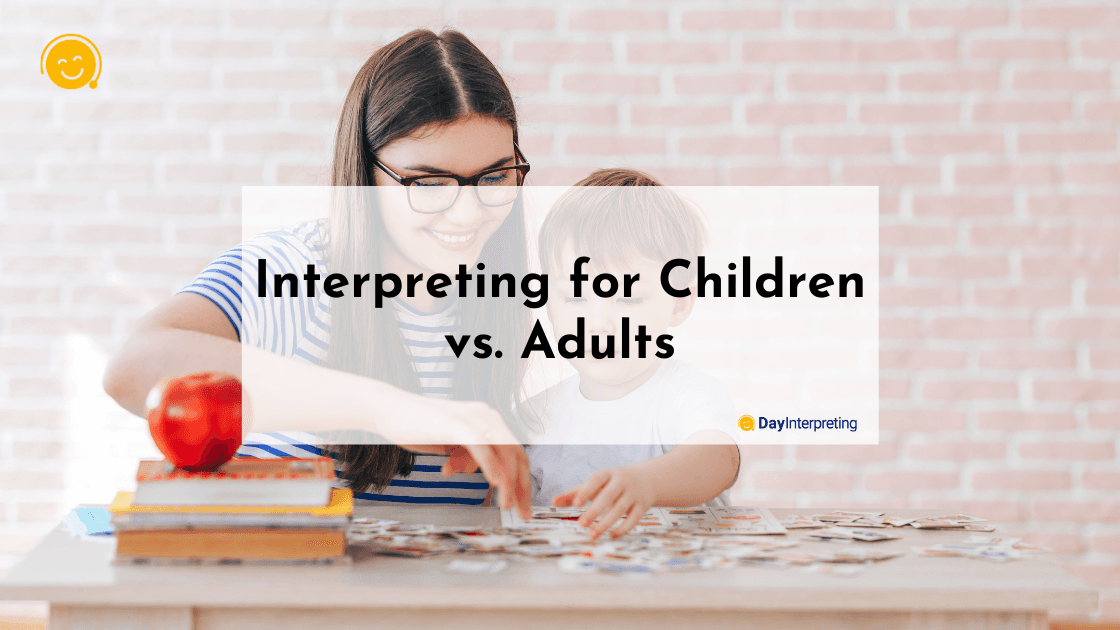
It’s not uncommon to refer to children as mini-adults, But all jokes aside, kids are nothing like adults. They don’t yet have the maturity or coping skills to handle everyday scenarios. Let alone traumatic events. And when it comes to interpreting for children, it’s a whole new ball game.
But often, children find themselves in situations they’re simply too young to understand. From school enrollments to legal matters, many kids have to navigate the adult world, and sometimes, without the help of parents or guardians.
Not speaking the local language can make this even scarier for kids. But that’s why interpreters that work with children take extra steps to assist them with communication. In this post, we’ll be taking a look at how children differ from adults. We also cover how interpreters adapt their interpreting styles to address these differences.
What You Need to Know About Interpreting for Children
Kids Have Smaller Vocabularies
Children, especially younger ones, have smaller vocabularies. Interpreters can interpret the speaker directly. And when the child doesn’t seem to understand the meaning of a word, they should define it in simpler terms. It’s essential for interpreters to interpret at the same vocabulary level as the child.
And Shorter Attention Spans
Kids may struggle to stay focused during a long conversation. And interpreters should work with this in mind. When interpreting for children, it’s always best to use shorter and simpler sentences whenever possible without paraphrasing as to avoid omitting important information.
Children Are Sensitive to Tone
Regardless of their age, kids are aware of the power differential between them and grownups. Interpreters might need to alter their vocabulary and sentence structure when working with kids. But they should try to avoid sounding patronizing at all costs.
Kids Struggle to Regulate Their Emotions and Non-Verbal Communication
Children still have to master the art of regulating their emotions and expressing themselves. Interpreters must remember that the process can be very stressful for children. And they must be patient with them, keeping their speech steady and clear.
Some Children Might Not Be Comfortable with Adults
While some kids will happily have a conversation with adults, others fear strangers. The child’s willingness to talk might also be affected by the presence or absence of a parent or guardian in the room. It’s essential for interpreters to pay attention to how the child responds and adjust their tone accordingly.
Need Professional Interpreting Services?
The key to interpreting for children lies in the ability to adapt to their needs. It’s all about adaptive language access for younger children. Understanding the capabilities and limitations of very young children helps interpreters build trust with the children and ensure the process goes more smoothly.
Every child is unique. Some have impressive vocabularies. And others are shy. Which might necessitate a different approach for interpreting. The method of approach might also need to be adapted based on the unique setting and native language. The same interpreting style cannot be used in classrooms, hospitals, and courtrooms. Professional interpreters are conscious of how children respond to them and are able to adjust their approach on the fly to keep things moving.
At Day Interpreting, we have a team of highly skilled and experienced interpreters ready to assist with educational and other child-related interpreting services. Get in touch with our team today to learn more about our range of specialized services and how we can help you bridge the language gap!

Written by
Seldean SmithSeldean is a multi-skilled content wizard that dedicates herself to writing content that goes beyond merely sparking interest in the audience.